- Your Kidney Health, Our Priority
- +91 8849736142
- kosha1012d@gmail.com
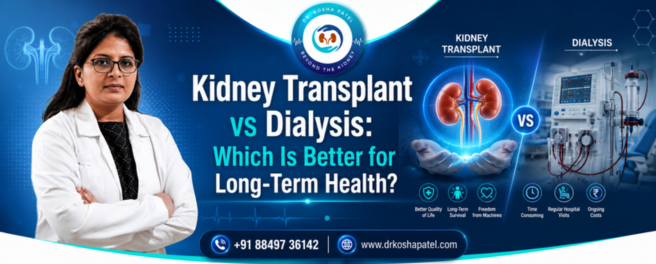
Kidney Transplant vs Dialysis: Which Is Better for Long Term Health?

Early Signs of Kidney Problems in Children: Every Parent Should Know
May 7, 2026
Nephrologist In Ahmedabad Now
May 7, 2026Introduction
When your kidneys stop functioning properly due to chronic kidney disease (CKD) or end-stage renal disease (ESRD), they can help take on their basic role: dialysis and renal transplantation. Both are the treatment of life-only how to compare when it comes to long-term health?
Let’s discuss it and help you understand the differences, benefits, and considerations of each of them, so you can make a decision or support a loved one on this path.
What is Dialysis?
Dialysis is a treatment that performs the work that your kidneys can no longer perform—removing waste, excess fluids, and toxins from your blood. There are two main types:
- Hemodialysis: This includes the use of a blood-cleaning machine. Usually, this happens in a dialysis center three times a week, and each session takes about four hours.
- Peritoneal dialysis: This happens at home. A special fluid is introduced into the abdominal cavity through a catheter that absorbs waste products and is then drained.
While dialysis does not cure kidney failure, it is a life-sustaining treatment that helps master symptoms effectively. To understand which method is best for your specific needs, you can consult an expert like Dr. Kosha Patel, who specializes in managing renal care and long-term health.
What is Kidney Transplantation?
The kidney transplantation is a surgery where a healthy kidney from a living or deceased donor is placed in your body. The new kidney takes over the work of filtering blood.
After transplantation, you will have to take medication for a lifetime to prevent your body from rejecting a new organ. While the idea of surgery and lifelong drugs may feel stunning, for many patients, it offers a significant improvement in lifestyle and long-term health.
Long-term Health: How do they Compare?
Let’s take a closer look at how dialysis and renal transplantation accumulate in terms of long-term results:
Life length
Studies show that kidney transplant patients generally live longer than patients on long-term dialysis. Successful transplantation can offer 10-20 years of life compared to staying on dialysis.
Quality of life
Transplant patients often state that they feel more energetic, have fewer dietary restrictions, and enjoy more freedom in everyday life. Dialysis can be tiring and time-consuming, which can affect your ability to work or travel freely.
Health complications
Over time, dialysis can increase the risk of heart disease, infections, and bone health problems. While patients with transplantation also face risks, such as the rejection of the organ or side effects from the treatment of long-term complications, these risks are usually lower.
Cost over time
Dialysis includes ongoing sessions, tests, and medicines that can be very expensive. Transplantation has high initial costs (surgery, hospital stay), but in the long run, it is often more cost-effective due to a smaller number of visits to the hospital and improved health.
Health Risk Comparison
Over time, dialysis may lead to complications like heart disease, infections, or bone-related issues. Although transplant patients also face risks—such as organ rejection or side effects from lifelong medication—these risks are generally lower in the long run.
Long-Term Health Outcomes
Dialysis may lead to long-term issues like heart disease or infections. A successful transplant, though it requires lifelong medication, often results in better overall health, more energy, and fewer hospital visits.
Finally, the right treatment depends on your overall health, age, lifestyle, and personal preferences. Work closely with your nephrologist or transplant team to consider your possibilities. Medical leadership is essential, but your comfort and goals depend on the choice of the best way forward.
Symptoms That Shouldn’t Be Ignored
Some characters may initially seem smaller, but they are a way to signal your body needs support. Beware of:
- Constant fatigue or reduced energy
- Swelling in the legs, ankles, or face
- Changes in urination (more, less, or foam)
- Difficulty concentrating or thinking clearly
- Shortness of breath or nausea without a clear reason
- Loss of appetite or sudden weight loss
- Bad breath or a metallic taste in the mouth
How long should you monitor symptoms before taking action?
Children may experience mild symptoms of kidney-related issues that are easy to overlook. However, even minor symptoms—such as swelling, fatigue, or urine changes—should be taken seriously. The longer you wait, the higher the risk of complications. Early action helps to prevent permanent damage and promotes healthy growth of your child. If any symptom persists for more than a few days or is still coming back, it is time to consult an expert.
When should you consider a transplant or kidney dialysis?
- Your kidney function is seriously reduced (usually below 15%).
- You are experiencing constant fatigue, swelling, or changes in urination
- Your creatinine or GFR levels get worse
- You have been diagnosed with kidney disease in the final stage (ESKD).
- Your doctor recommended that you plan long-term kidney support
Frequently Asked Questions
1. Is a kidney transplant always better than dialysis?
For the majority of patients, a kidney transplant is considered the superior long-term treatment. It generally offers a longer life expectancy, a better quality of life, and fewer dietary restrictions compared to dialysis. However, the “best” choice depends on a patient’s age, overall health, and ability to tolerate surgery.
2. Can I stay on dialysis forever?
Technically, yes. Many people live for decades on dialysis. However, dialysis only performs about 10–15% of the work of a healthy kidney and can be hard on the heart over time. Most doctors recommend dialysis as a “bridge” while waiting for a transplant rather than a permanent solution.
3. How long does a transplanted kidney usually last?
On average, a kidney from a living donor lasts 15 to 20 years, while a kidney from a deceased donor lasts 10 to 15 years. If a transplanted kidney fails, a patient can return to dialysis or even undergo a second transplant.
4. What are the main lifestyle differences between the two?
- Dialysis: Requires a strict schedule (usually 3 times a week for several hours), limited fluid intake, and a very restrictive diet.
- Transplant: Offers freedom from machines and a nearly normal diet, but requires taking immunosuppressant medications every single day at the same time to prevent organ rejection.
5. Does a transplant eliminate the need for all medications?
No. In fact, transplant patients often take more medication initially. To keep the body from attacking the new kidney, you must take anti-rejection drugs for the entire life of the transplant. Skipping even a few doses can lead to organ failure.
6. Is the surgery for a kidney transplant dangerous?
Like all major surgeries, it carries risks such as infection or bleeding. However, kidney transplantation is now a routine procedure with a very high success rate (over 95% in the first year). For many, the long-term health risks of staying on dialysis are higher than the risks of the surgery itself.
7. How long is the waiting list for a kidney?
The wait time varies significantly by region and blood type. It can range from a few months to several years. This is why living donation (from a family member or friend) is often encouraged, as it bypasses the national waiting list and allows for a scheduled surgery.
8. Can children receive kidney transplants?
Yes, and it is usually the preferred treatment for children. A transplant allows for better physical growth, cognitive development, and a more normal childhood compared to the growth-stunting effects and time demands of long-term dialysis.
9. Will I be able to work or travel after a transplant?
Yes. One of the biggest benefits of a transplant is the return to a “normal” life. Most patients can return to work, exercise, and travel freely once they have recovered from surgery, whereas dialysis often makes traveling and full-time employment difficult.
10. Which option is more expensive in the long run?
While the upfront cost of a transplant surgery is high, it is actually more cost-effective over time. After about two to three years, the cost of maintaining a transplant (medications and checkups) is significantly lower than the ongoing costs of dialysis treatments and hospitalizations.
Conclusion
Treatment of dialysis and renal transplant surgery are effective medical solutions to control kidney failure. Regarding long-term health, successful kidney transplantation often provides better results in life expectancy, improved quality of life, and overall well-being. This means that dialysis remains a key option to save lives, especially for patients waiting for transplantation or patients who are not eligible for a surgical procedure.
The best choice depends on your current health and lifestyle. Always stay informed, consult your nephrologist, and look for support because your kidney health deserves thoughtful and personalized care.
Contact Details:
Address: Shalby Hospital, SG Highway, Opp. Karnavati Club, Ramdevnagar, Ahmedabad
Phone No: +91 88497 36142 , +91 84606 58464
Email: kosha1012d@gmail.com
Website: www.drkoshapatel.com
