- Your Kidney Health, Our Priority
- +91 8849736142
- kosha1012d@gmail.com
Dialysis Centre in Ahmedabad

How to Sleep After Kidney Biopsy
September 21, 2026
Best Transplant Nephrologist in Ahmedabad
September 21, 2026Dialysis Centre in Ahmedabad | Dr Kosha Patel
Living with advanced kidney disease requires thoughtful management, informed decision-making, and access to dependable medical care. When your kidneys lose their ability to filter blood, choosing a reliable dialysis centre in Ahmedabad becomes a critical step. Dialysis acts as a life-sustaining treatment. It takes over the vital filtering jobs that healthy kidneys do every single day.
Finding the right facility means looking at medical expertise, hygiene standards, equipment quality, and patient support. Experienced specialists like Dr Kosha Patel emphasize that successful treatment needs more than just good machines. It relies on continuous medical supervision, careful monitoring, and clear communication. This guide helps patients and caregivers understand kidney care, compare treatment options, and choose the best dialysis centre in Ahmedabad.
What Is Dialysis?
Dialysis is a medical treatment that cleans your blood when your kidneys can no longer do their job. Healthy kidneys constantly filter waste products, extra water, and toxins from your body. They remove these impurities through your urine while keeping essential minerals balanced.
When kidney function drops significantly, dangerous waste products build up in your bloodstream. This buildup happens during severe acute kidney injury or advanced chronic kidney disease. Dialysis works as an artificial filter. It cleans the blood, removes harmful metabolic waste like urea and creatinine, and balances your body’s fluid levels.
When Is Dialysis Recommended?
A qualified nephrologist determines when you need dialysis treatment in Ahmedabad by checking your lab tests and physical symptoms. Doctors usually recommend starting treatment when kidney function falls to Stage 5 Chronic Kidney Disease, also known as End-Stage Renal Disease (ESRD).
Common reasons to start dialysis include:
- Severe Fluid Retention: Swelling in your legs, ankles, or lungs that does not improve with medication.
- Uremic Symptoms: High toxin levels in the blood that cause severe nausea, vomiting, loss of appetite, or confusion.
- Uncontrolled High Blood Pressure: Severe hypertension that stays high despite taking several blood pressure drugs.
- Dangerous Electrolyte Imbalances: High potassium levels that threaten your heart rhythm.
- Acute Kidney Injury (AKI): A sudden loss of kidney function from illness or infection where short-term dialysis gives your kidneys time to heal.
Every patient’s timeline looks different. Specialists like Dr Kosha Patel review your health history, blood work, and daily lifestyle before building your personalized treatment plan.
Types of Dialysis
Learning about different dialysis treatment options helps you make confident choices about your care. Patients generally choose between two primary types of therapy:
1. Hemodialysis
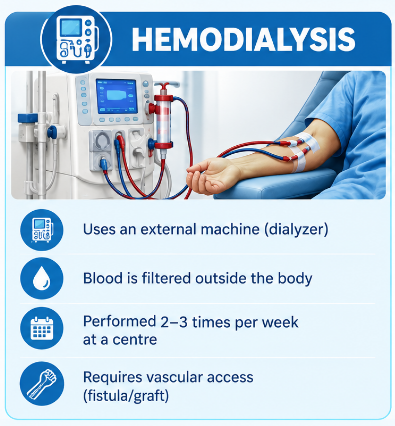
Hemodialysis is the most common treatment for kidney failure. An external machine called a dialyzer filters your blood outside your body. The doctor creates a vascular access point in your arm to connect you to the machine. The machine draws blood, filters out toxins and extra fluid, and safely returns the clean blood to your body.
Most patients visit a specialized dialysis centre in Ahmedabad three times a week for these multi-hour sessions.
2. Peritoneal Dialysis
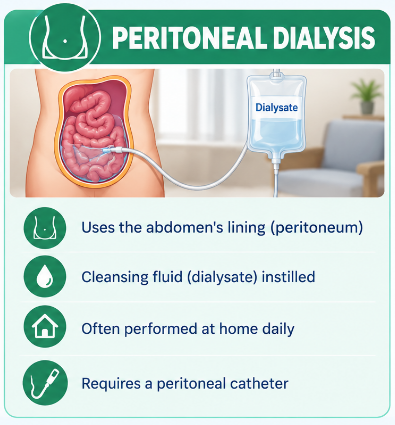
Peritoneal dialysis uses the lining of your own abdomen—the peritoneal membrane—to clean your blood inside your body. A surgeon places a soft, flexible tube called a catheter into your abdomen. You fill your abdomen with a cleansing fluid called dialysate. The fluid absorbs waste products from nearby blood vessels, and you drain it out after a few hours.
Many patients perform this treatment at home every day. However, you must maintain strict cleanliness to prevent abdominal infections. You will still visit a dialysis center in Ahmedabad regularly so your medical team can check your progress.
What to Look for in a Dialysis Centre in Ahmedabad
Selecting the right clinic makes a huge difference in your long-term health and comfort. When you compare options for a dialysis centre in Ahmedabad, keep these key factors in mind:
- Qualified Nephrologist Supervision: Look for clinics managed by experienced kidney specialists like Dr Kosha Patel who can respond instantly to any medical changes.
- Certified Dialysis Staff: The nursing team and technicians should hold professional credentials, understand technical procedures, and treat patients with empathy.
- Strict Infection Control: The clinic must sanitize equipment thoroughly, use fresh or safely sterilized tubing, and follow strict blood-screening guidelines.
- Modern Equipment: Ensure the facility uses reliable dialysis machines and advanced reverse-osmosis (RO) water purification systems.
- Active Patient Monitoring: Staff should check your blood pressure, pulse, and fluid removal rates throughout every session.
- Emergency Preparedness: The centre needs quick access to intensive care services and hospital transport for sudden emergencies.
- Convenient Location: Choose a dialysis centre in Ahmedabad with easy travel routes to reduce stress and fatigue on treatment days.
Why Medical Supervision Matters During Dialysis
Dialysis actively changes your blood pressure, fluid levels, and body chemistry during every appointment. Because these changes happen quickly, expert medical supervision keeps you safe and comfortable.
Top specialists like Dr Kosha Patel guide every step of your dialysis care in Ahmedabad. Medical supervision helps in several ways:
- Precision Fluid Removal: Removing fluid too fast causes sudden blood pressure drops and painful muscle cramps. Removing too little leaves fluid in your lungs and strains your heart.
- Vascular Access Care: Regular doctor checks protect your AV fistula, graft, or catheter from blood clots and infections.
- Anemia and Bone Health Management: Your medical team orders regular blood tests to manage hemoglobin levels, calcium balance, and bone health.
- Fast Emergency Care: Experienced doctors step in immediately if you experience dizziness, blood pressure spikes, or chest discomfort during treatment.
What Happens During a Hemodialysis Session?
Knowing what to expect at your dialysis centre in Ahmedabad takes the anxiety out of your visits.
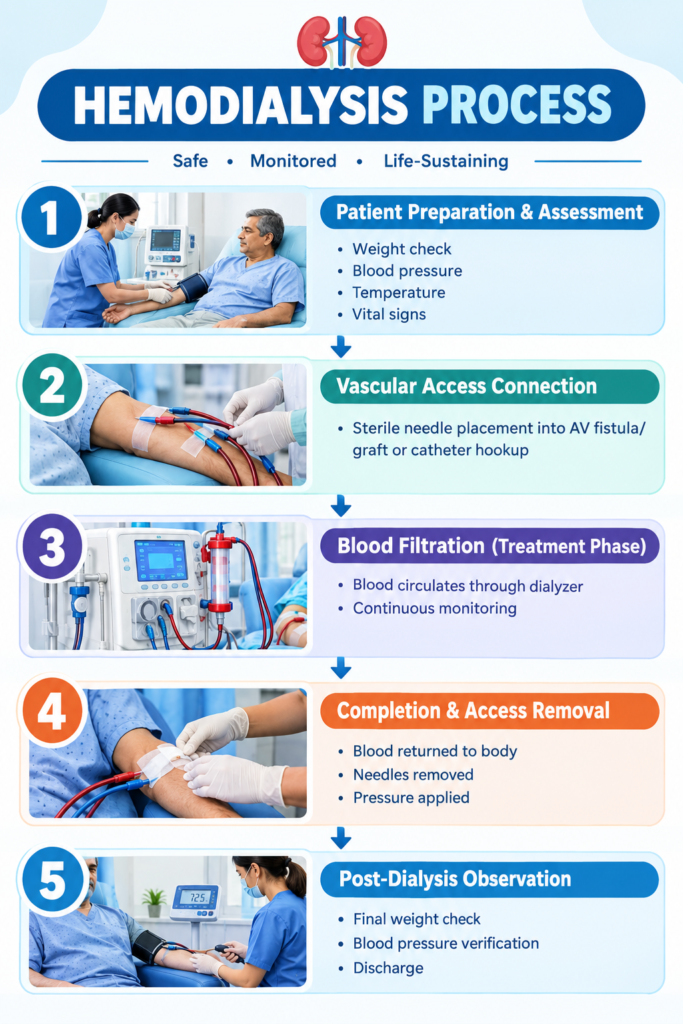
Step 1: Initial Preparation
When you arrive, the care team measures your weight, blood pressure, temperature, and pulse. Comparing your current weight with your previous target weight tells the team exactly how much fluid to remove.
Step 2: Connecting the Access Site
A nurse cleans your arm or catheter site with strong antiseptic wipes. If you have an AV fistula or graft, the nurse inserts two small needles. One needle sends blood to the machine, while the second returns clean blood back to you.
Step 3: Filtering the Blood
The machine gently pumps your blood through the dialyzer filter. Inside the filter, waste products and extra fluid cross into a cleansing liquid. The machine holds only a tiny fraction of your body’s blood at any single moment.
Step 4: Ongoing Monitoring
Automated monitors check your blood pressure and flow rates every few minutes. Nurses and doctors like Dr Kosha Patel observe you closely throughout the session to keep you comfortable.
Step 5: Wrapping Up
When the machine finishes the process, it returns the remaining blood back into your body. The team removes the needles, applies gentle pressure to stop any bleeding, and checks your final weight and blood pressure before you head home.
How Often Is Dialysis Needed?
Every patient needs a unique schedule for dialysis care in Ahmedabad. Your nephrologist sets your treatment frequency based on your remaining kidney function, body weight, and overall health.
- Standard In-Centre Care: Most patients need treatment three times a week. Each session usually lasts between 3 and 4 hours.
- Personalized Adjustments: You may need longer or more frequent sessions if you gain extra fluid quickly or have other health conditions.
Never skip or shorten your scheduled sessions. Missing treatment lets toxins build up quickly, which causes serious heart and breathing problems. Doctors like Dr Kosha Patel adjust your treatment times as your health needs change.
Preparing for Dialysis: Practical Advice
A little planning makes your visits to a dialysis center in Ahmedabad much easier:
- Protect Your Access Arm: Keep your access site clean. Do not let anyone take blood pressure readings or draw blood from your access arm, and avoid tight sleeves or heavy watches.
- Watch Your Fluids and Diet: Follow your daily fluid limits carefully so you do not gain too much water weight between appointments.
- Take Your Prescribed Medicines: Some blood pressure drugs wash out during treatment. Ask your doctor when you should take your daily doses on treatment days.
- Arrange Rides in Advance: Have a family member or driver take you home, especially during your first few weeks of therapy when you might feel tired.
- Wear Layered Clothes: Wear comfortable clothes with easy access to your arm or chest catheter. Dialysis rooms are kept cool, so bring a warm blanket.
Diet and Lifestyle During Dialysis
Eating the right foods supports your overall nephrology care. Dialysis replaces only a portion of healthy kidney function, so your diet does a lot of heavy lifting.
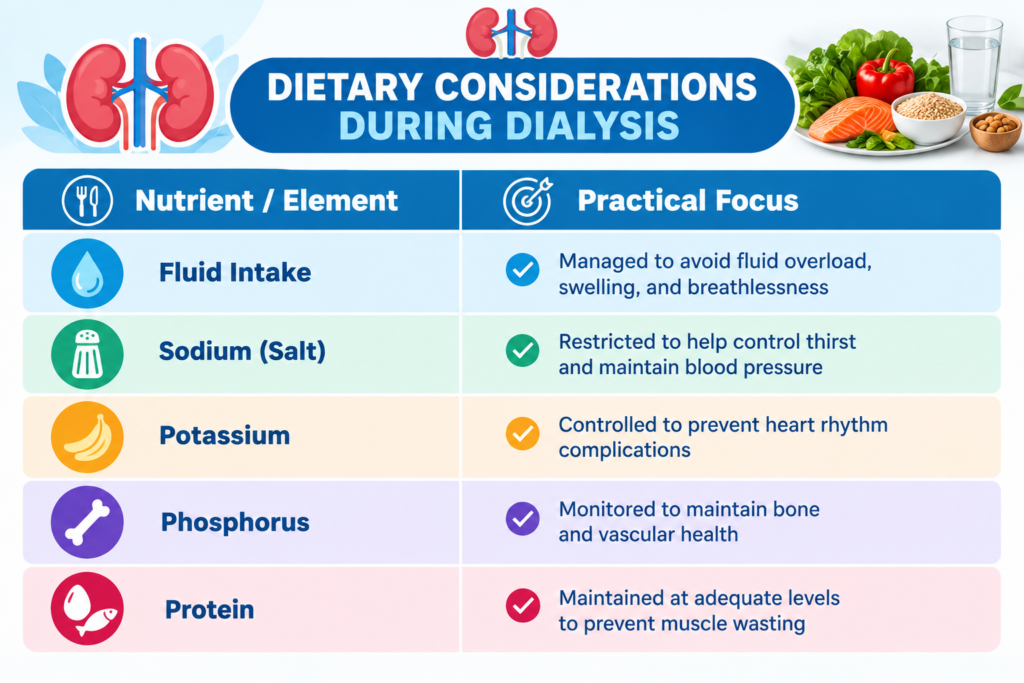
- Cut Back on Sodium: Eating less salt stops you from feeling excessively thirsty and keeps fluid buildup under control.
- Watch Your Potassium: High potassium levels cause dangerous heart conditions. Limit high-potassium foods like bananas, oranges, and deep leafy greens if your doctor advises it.
- Manage Phosphorus: High phosphorus pulls calcium out of your bones, making them weak. Your doctor may prescribe phosphorus-binding pills to take with your meals.
- Eat Enough Protein: Patients on regular hemodialysis need good protein sources—like eggs, fish, and poultry—to maintain muscle strength and prevent malnutrition.
Work directly with your doctor and renal dietitian. Experts like Dr Kosha Patel tailor these rules so you eat well while staying safe.
Questions to Ask Before Choosing a Dialysis Centre in Ahmedabad
Take this checklist with you when visiting a dialysis centre in Ahmedabad:
- Doctor Availability: Is a qualified nephrologist present in the facility during treatment hours?
- Staff Credentials: What certifications do the nurses and technicians hold?
- Infection Control: How does the clinic clean its machines and handle blood-borne safety?
- Water Safety: How often does the clinic test its reverse-osmosis water purification system?
- Emergency Plans: How does the team handle sudden medical emergencies during treatment?
- Schedule Options: Do you offer morning, afternoon, or evening shifts that fit my schedule?
- Facility Comfort: Is the treatment room clean, quiet, well-lit, and comfortable?
The Importance of Regular Nephrology Consultations
Dialysis is just one piece of your overall care plan. You still need regular clinic appointments with your kidney doctor to protect your health, control underlying conditions like diabetes, and boost your energy levels.
Regular clinic visits with specialists like Dr Kosha Patel allow your team to:
- Review monthly blood tests to measure how well your treatments clean your blood.
- Adjust your dry weight target as your appetite and body weight change.
- Treat common side effects like low blood counts (anemia) and bone changes early.
- Discuss long-term options like a kidney transplant when appropriate.
Comprehensive kidney care in Ahmedabad works best when you, your family, your nurses, and your nephrologist work together as a team.
Conclusion
Finding a top-quality dialysis centre in Ahmedabad gives you a strong foundation for managing advanced kidney disease. A clean facility with modern equipment, skilled nurses, and expert medical supervision helps you get safe, effective therapy every time you walk through the door.
Living with kidney disease presents new challenges, but accurate medical information and great dialysis care in Ahmedabad help you stay active and feel your best. If you or a loved one need support, talk with a trusted specialist like Dr Kosha Patel to build a safe, personalized kidney care plan today.
Quick Summary for Patients & Caregivers
- Dialysis is essential: It removes toxins and extra fluid when your kidneys cannot function.
- Hemodialysis is common: Most patients need three weekly visits lasting 3 to 4 hours each.
- Look for quality: Choose clinics with strict hygiene, water testing, and on-site doctors.
- Expert guidance matters: Doctors like Dr Kosha Patel customize your fluid goals and track your blood work.
- Diet plays a huge role: Control your salt and fluid intake while eating enough protein to stay strong.
Frequently Asked Questions (FAQs)
Q1: How long does a typical hemodialysis session take at a dialysis centre in Ahmedabad?
Answer: A standard hemodialysis session generally takes between 3 to 4 hours, performed 3 times per week. However, the exact duration and frequency are personalized by your nephrologist, such as Dr Kosha Patel, based on your body weight, lab results, and remaining kidney function.
Q2: Is dialysis treatment painful?
Answer: Dialysis itself is not painful. You may feel a slight prick when the needles are inserted into your vascular access site at the start of the session, similar to a routine blood draw. Some patients experience mild muscle cramps or temporary drops in blood pressure during treatment, but the medical team continuously monitors you to keep you comfortable.
Q3: What should I look for when choosing the best dialysis centre in Ahmedabad?
Answer: Key factors to evaluate include:
- Direct supervision by an experienced nephrologist like Dr Kosha Patel.
- Certified and compassionate dialysis nurses and technicians.
- Advanced, regularly serviced reverse-osmosis (RO) water purification systems.
- Strict infection-control and sanitization protocols.
- Emergency response infrastructure and hospital connectivity.
Q4: Can I travel or work while undergoing regular dialysis?
Answer: Yes. Many dialysis patients continue to work and lead active lives. If you travel, you can arrange “guest dialysis” sessions at a certified dialysis centre in Ahmedabad or another city in advance. Discuss your travel plans with your kidney care team to ensure seamless medical continuity.
Q5: What dietary changes are required once I start dialysis?
Answer: While individual needs vary, most dialysis patients need to limit their daily intake of sodium (salt), fluids, potassium, and phosphorus to prevent dangerous fluid buildup and chemical imbalances between sessions. In contrast to pre-dialysis stages, patients on regular hemodialysis typically require adequate high-quality protein to maintain muscle health. Always follow a diet plan tailored specifically for you by your nephrologist and renal dietitian.
