Best Resistant Hypertension Doctors in Ahmedabad | Dr. Kosha Patel
Living with high blood pressure can feel overwhelming, especially when daily medications and lifestyle adjustments fail to bring your readings into a safe range. Uncontrolled blood pressure is a major risk factor for heart and kidney complications, requiring specialized medical evaluation. Patients seeking the best resistant hypertension doctors in Ahmedabad need expert care to identify underlying causes, refine treatment plans, and protect long-term organ health.
Comprehensive evaluation by a specialist like Dr. Kosha Patel helps patients understand why their blood pressure remains elevated and what targeted interventions can achieve safe control.
What Is Resistant Hypertension?
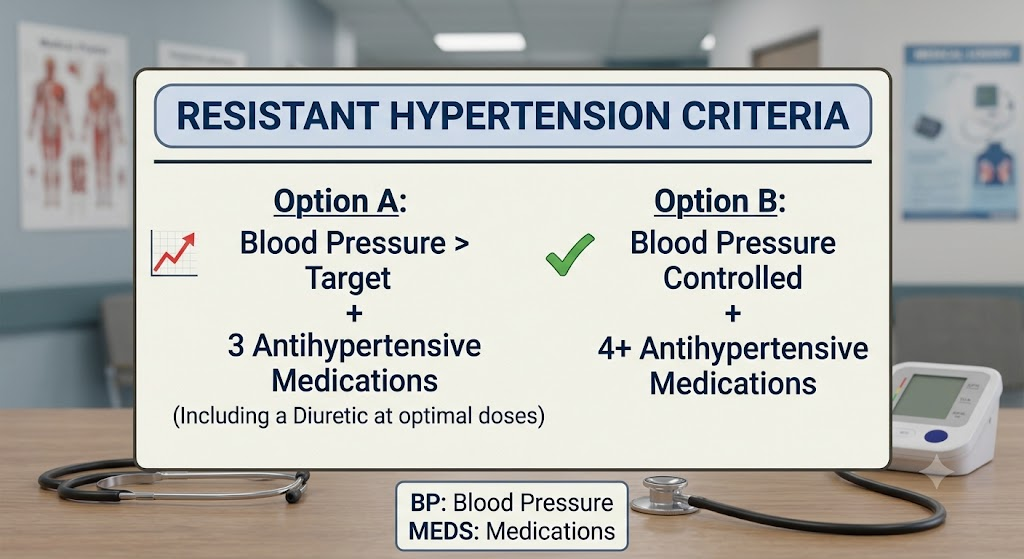
Resistant hypertension is defined as blood pressure that remains above target levels despite the concurrent use of three antihypertensive agents of different classes, one of which should typically be a diuretic. It also includes patients whose blood pressure is controlled but requires four or more medications to achieve that control.
A formal diagnosis requires clinical evaluation to rule out pseudo-resistance. False readings can stem from “white-coat hypertension”—where blood pressure spikes in a clinic setting—or improper cuff sizing. Consultations with the best resistant hypertension doctors in Ahmedabad help confirm genuine resistance before modifying treatments.
Common Causes and Risk Factors
Resistant hypertension often involves multiple contributing factors rather than a single trigger. Understanding these root causes allows specialists to tailor therapy effectively.
Dietary Sodium Excess: High salt intake increases fluid retention, directly counteracting blood pressure medications.
Chronic Kidney Disease (CKD): The kidneys regulate fluid balance and blood pressure; impaired kidney function frequently causes secondary hypertension.
Obstructive Sleep Apnea (OSA): Disrupted breathing during sleep causes repeated nocturnal oxygen drops, triggering surges in stress hormones.
Hormonal and Endocrine Disorders: Conditions like primary aldosteronism, Cushing’s syndrome, or thyroid dysfunction disrupt systemic vascular tone.
Medication Interactions: Regular use of nonsteroidal anti-inflammatory drugs (NSAIDs), decongestants, oral contraceptives, or corticosteroids can elevate blood pressure.
Medication Non-Adherence: Missed doses, incorrect timing, or side-effect concerns can mimic treatment resistance.
Identifying these triggers requires a thorough evaluation by the best resistant hypertension doctors in Ahmedabad.
Symptoms and Potential Complications
Hypertension is often called a “silent threat” because persistently high readings can occur without obvious symptoms. Some individuals may experience subtle warning signs:
Persistent headaches or a feeling of heaviness in the head
Shortness of breath during routine daily activities
Occasional dizziness or lightheadedness
Unexplained fatigue or visual disturbances
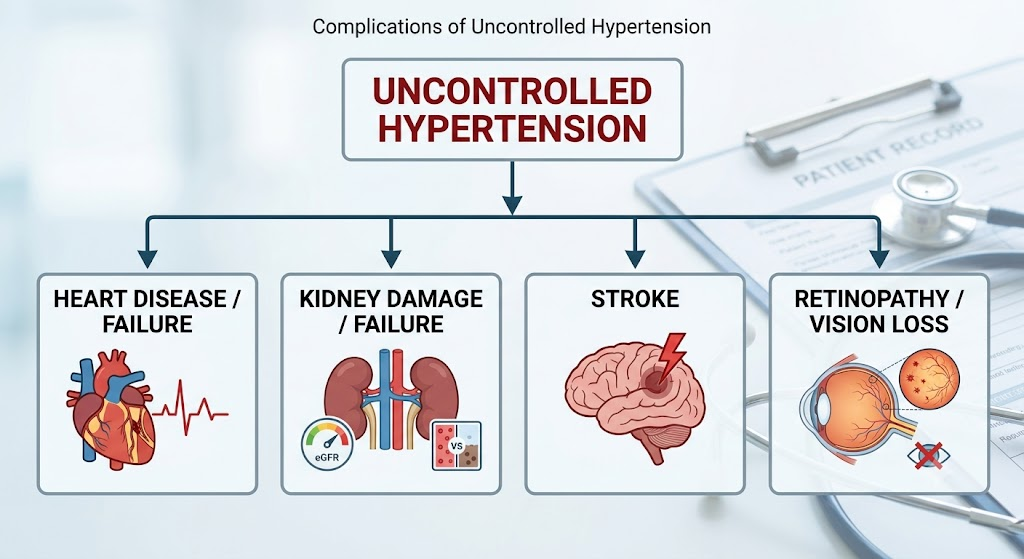
When blood pressure remains uncontrolled, structural vascular strain increases. Over time, this elevates the risk of heart attacks, stroke, heart failure, and chronic kidney failure. Seeking care from the best resistant hypertension doctors in Ahmedabad helps protect target organs before irreversible damage occurs.
When to Consult the Best Resistant Hypertension Doctors in Ahmedabad
If blood pressure stays elevated despite taking three or more prescribed medications, consult a specialist. Patients searching for the best resistant hypertension doctors in Ahmedabad should consider specialist care under these key conditions:
Persistently Elevated Readings: Home monitoring consistently records systolic readings above $130\text{ mmHg}$ or diastolic above $80\text{ mmHg}$ despite full adherence.
Medication Side Effects: Uncomfortable side effects that disrupt regular dosing schedules.
Suspected Secondary Causes: Unexplained fluid retention, worsening kidney function tests, or sudden spikes in blood pressure.
Early Organ Stress: Signs of kidney strain (protein in urine) or left ventricular hypertrophy on an ECG.
Under the care of experienced specialists like Dr. Kosha Patel, patients receive structured, individualized evaluations to get their readings back on track.
How Resistant Hypertension Is Diagnosed
Accurate diagnosis requires distinguishing true resistant hypertension from external variables. Specialists use a systematic clinical process:
Diagnostic Step
Clinical Purpose
In-Office Protocol
Uses validated, automated cuffs with proper arm positioning and repeated resting measurements.
Ambulatory BP Monitoring (ABPM)
Tracks blood pressure over 24 hours to assess nighttime dipping patterns and rule out white-coat effects.
Medication Review
Evaluates current drug combinations, dosages, timing, and potential drug-drug interactions.
Uses renal doppler ultrasound or adrenal imaging to evaluate potential secondary causes.
Consulting the best resistant hypertension doctors in Ahmedabad ensures diagnostic thoroughness at every stage.
Treatment Options for Resistant Hypertension
Managing resistant hypertension requires an evidence-based approach focused on cause-specific treatment. Specialist management typically involves:
1. Optimizing Regimens
Reviewing current drug schedules ensures patients take complementary antihypertensive classes—such as ACE inhibitors/ARBs, calcium channel blockers, and thiazide-like diuretics—at optimal dosages.
2. Mineralocorticoid Receptor Antagonists
Adding low-dose spironolactone or eplerenone often provides significant pressure reduction in resistant cases by counteracting aldosterone excess.
3. Addressing Secondary Causes
When underlying conditions like renal artery stenosis, sleep apnea, or hormonal imbalances are identified, targeted treatment helps restore baseline pressure control.
Important Patient Safety Note: Never stop, adjust, or introduce blood pressure medications without consulting your physician. Any medication change must be supervised by a medical professional.
Partnering with the best resistant hypertension doctors in Ahmedabad provides access to safe, structured medical adjustment strategies.
Lifestyle Changes That Support Blood Pressure Control
Medical therapy works best when paired with targeted lifestyle adjustments. Key evidence-based modifications include:
Sodium Reduction: Limit daily dietary sodium to less than $2,000\text{ mg}$ (approx. 1 teaspoon of salt) to reduce intravascular fluid volume.
Dietary Adjustments: Adopt a heart-healthy diet rich in whole grains, vegetables, fruits, lean proteins, and low-fat dairy.
Regular Physical Activity: Engage in 150 minutes of moderate aerobic exercise weekly, such as brisk walking, swimming, or cycling.
Weight Management: Gradual weight loss reduces cardiac workload and improves vascular responsiveness.
Alcohol & Tobacco Avoidance: Eliminate tobacco use and restrict alcohol consumption to avoid acute vascular constriction.
Sleep Hygiene: Maintain consistent sleep schedules and treat underlying sleep apnea to regulate nighttime stress hormones.
While essential, lifestyle changes complement rather than replace prescribed medical therapy. The best resistant hypertension doctors in Ahmedabad help integrate these habits alongside medical treatment.
The Role of Dr. Kosha Patel in Hypertension Care
Dr. Kosha Patel (MBBS, MD Internal Medicine, DrNB Nephrology) is a consultant nephrologist in Ahmedabad specializing in kidney disease, hypertension, dialysis, and renal transplant management. With advanced specialized training from premier medical institutes, including Muljibhai Patel Urological Hospital, she focuses on managing complex, hard-to-treat hypertension.
Because the kidneys play a central role in long-term blood pressure regulation, consulting a nephrologist is critical when standard therapies fail. Dr. Kosha Patel provides structured care across multiple locations in Ahmedabad, including consultations at Shalby Hospital (SG Highway and Naroda) and Paldi, offering accessible care for complex hypertension.
Questions to Ask During a Hypertension Consultation
Preparing for your appointment helps ensure a focused, productive discussion. Consider asking these key questions:
What is my target blood pressure based on my age and medical history?
Could my elevated readings be caused by an underlying secondary condition?
Are my current medications working together effectively, or do they need adjustment?
How frequently should I monitor and log my blood pressure at home?
Are there specific side effects I should watch for with my current prescription?
When should I schedule my next follow-up evaluation?
Collaborating with the best resistant hypertension doctors in Ahmedabad gives you clear, actionable answers tailored to your health profile.
Why Timely Management of Resistant Hypertension Matters
Delaying care for uncontrolled blood pressure increases the risk of long-term organ damage. Timely evaluation helps:
Prevent progressive loss of kidney function.
Lower the risk of cardiovascular events like strokes and heart attacks.
Identify treatable secondary causes early.
Reduce pill burden through optimized, synergistic drug combinations.
Seeking guidance from the best resistant hypertension doctors in Ahmedabad protects your cardiovascular health and overall quality of life.
Emergency Notice: A blood pressure reading above $180/120\text{ mmHg}$ requires immediate medical reassessment. If accompanied by symptoms such as chest pain, shortness of breath, sudden numbness, vision changes, or difficulty speaking, seek emergency medical care straight away.
Conclusion
Managing resistant hypertension requires expert evaluation, precise diagnosis, and an individualized treatment plan. Working with experienced specialists helps patients achieve better blood pressure control while protecting kidney and heart function.
If you or a loved one is dealing with uncontrolled blood pressure despite treatment, schedule a consultation with Dr. Kosha Patel in Ahmedabad to discuss a comprehensive evaluation.
Frequently Asked Questions (FAQs)
1. What makes hypertension “resistant” compared to standard high blood pressure?
Standard hypertension usually responds to one or two medications combined with lifestyle changes. Hypertension is classified as “resistant” when blood pressure remains elevated above target levels despite taking three properly dosed medications of different classes (including a diuretic), or when four or more medications are required to keep readings under control.
2. Why should I see a nephrologist for resistant hypertension?
The kidneys play a crucial role in regulating blood pressure by managing fluid volume, sodium levels, and hormone balances. Nephrologists like Dr. Kosha Patel specialize in kidney health and complex blood pressure disorders, making them uniquely equipped to identify secondary causes and fine-tune drug regimens.
3. Can stress alone cause resistant hypertension?
While chronic stress can contribute to temporary blood pressure spikes and overall cardiovascular strain, stress alone is rarely the sole cause of true resistant hypertension. It often acts alongside physical factors like high sodium intake, kidney disease, sleep apnea, or hormonal imbalances.
4. How long does it take to see improvements after adjusting treatment?
Medication adjustments can start lowering blood pressure within a few days to weeks, depending on the drug class. However, stabilizing resistant hypertension requires ongoing monitoring, dose adjustments, and lifestyle consistency over several weeks to months under medical supervision.
5. Is resistant hypertension curable?
Whether resistant hypertension can be fully resolved depends on its root cause. If an underlying secondary cause—such as primary aldosteronism or sleep apnea—is identified and successfully treated, blood pressure may drop significantly. In primary cases, it can be safely controlled with the right combination of medications and lifestyle management.