- Your Kidney Health, Our Priority
- +91 8849736142
- kosha1012d@gmail.com
Early Signs of Kidney Disease You Shouldn’t Ignore

Best Hospital for Kidney Biopsy in Ahmedabad
October 14, 2026
Best Nephrology Doctors in Ahmedabad
October 14, 2026Early Signs of Kidney Disease You Shouldn’t Ignore | Dr. Kosha Patel
Your kidneys work quietly behind the scenes every second of the day, filtering waste, balancing bodily fluids, and regulating vital hormones. Because these bean-shaped organs are remarkably adaptable, they can continue functioning even when damaged. As a result, subtle warning signals often go unnoticed until significant function is lost. Learning the early signs of kidney disease you shouldn’t ignore is one of the most effective steps you can take to protect your long-term health.
As healthcare advocates like Dr. Kosha Patel emphasize, early detection and timely medical evaluation can make a profound difference in managing kidney health. Many individuals attribute mild symptoms—such as fatigue, skin changes, or altered sleep—to daily stress or aging. However, recognizing the early signs of kidney disease you shouldn’t ignore allows patients and healthcare providers to take proactive action long before complications arise.
This comprehensive guide breaks down how your kidneys function, key symptoms to monitor, critical risk factors, and actionable steps to support your health.
Understanding Kidney Function and Disease
To appreciate why identifying the early signs of kidney disease you shouldn’t ignore is so vital, it helps to understand what healthy kidneys do. Located just below your rib cage on either side of your spine, your kidneys perform several essential tasks:
- Filtering Waste and Excess Fluid: They process approximately 120 to 150 quarts of blood daily to produce urine, removing toxins and extra water.
- Balancing Electrolytes: They maintain optimal levels of sodium, potassium, calcium, and phosphate, which are critical for nerve and muscle function.
- Regulating Blood Pressure: Through hormone secretion (such as renin), kidneys help control systemic blood pressure.
- Supporting Bone Health and Red Blood Cells: They convert Vitamin D into its active form and produce erythropoietin, a hormone that stimulates red blood cell production in bone marrow.
When kidney tissue suffers damage—whether from high blood pressure, diabetes, or inflammation—its filtering ability declines. Dr. Kosha Patel notes that because chronic kidney disease (CKD) usually develops gradually over months or years, early symptoms are often mild or easy to misinterpret.
10 Early Signs of Kidney Disease You Shouldn’t Ignore
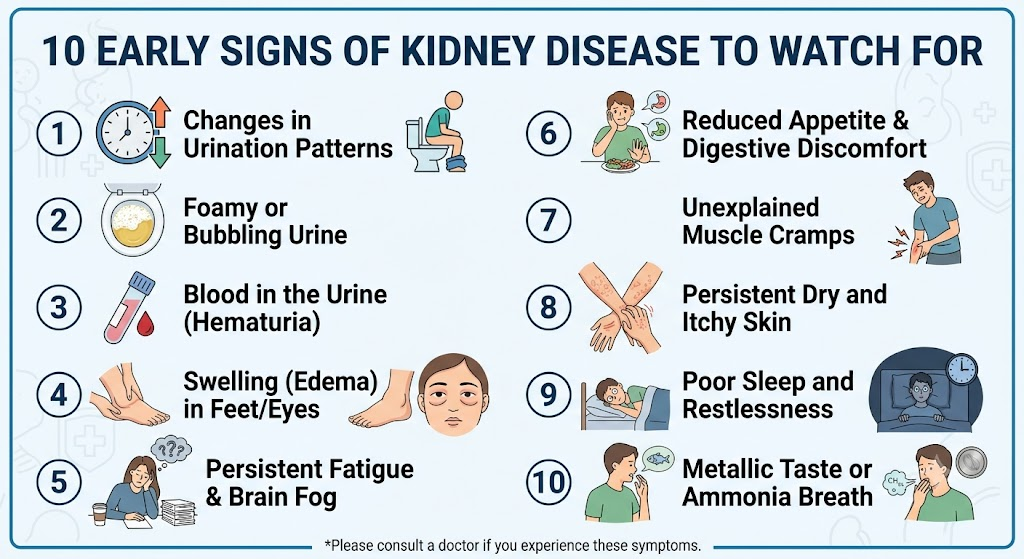
While early-stage kidney disease can be silent, your body often provides subtle clues. Paying close attention to these signals is vital. Below are ten key early signs of kidney disease you shouldn’t ignore:
1. Changes in Urination Patterns
Changes in how often or when you pass urine are primary early signs of kidney disease you shouldn’t ignore. You might feel the urge to urinate more frequently, particularly at night (nocturia), or notice that you are passing smaller amounts of urine than usual.
2. Foamy or Bubbling Urine
Excessive bubbles or foam in the toilet bowl—especially foam that requires multiple flushes to clear—can indicate protein (albumin) in your urine. Healthy kidney filters keep protein in the blood; when damaged, protein leaks out. This symptom is one of the classic early signs of kidney disease you shouldn’t ignore.
3. Blood in the Urine
Healthy filters prevent blood cells from leaking into the urine. Seeing pink, red, or tea-colored urine (hematuria) is a clear warning signal. While blood in the urine can stem from infections or kidney stones, it remains one of the critical early signs of kidney disease you shouldn’t ignore.
4. Swelling Around Eyes, Ankles, Feet, or Legs
Decreased kidney function leads to sodium and fluid retention. This fluid accumulation causes swelling, known as edema. Swelling around your eyes in the morning or tight shoes around your feet and ankles are notable early signs of kidney disease you shouldn’t ignore.
5. Persistent Fatigue, Weakness, and Poor Concentration
Kidneys produce erythropoietin, which tells your body to make red blood cells. As function declines, red blood cell counts drop, leading to anemia. Anemia causes constant exhaustion, weakness, and difficulty concentrating—frequent early signs of kidney disease you shouldn’t ignore.
6. Reduced Appetite, Nausea, or Digestive Discomfort
A buildup of waste products and toxins in the bloodstream (uremia) can affect your digestive system. Experiencing a sudden loss of appetite, mild nausea, or an unexplained metallic taste in your mouth are subtle early signs of kidney disease you shouldn’t ignore, as Dr. Kosha Patel often reminds patients undergoing general health evaluations.
7. Unexplained Muscle Cramps
Electrolyte imbalances resulting from impaired kidney function—specifically altered calcium and phosphorus levels—can trigger painful muscle twitching and cramping, particularly in the legs.
8. Persistent Dry, Itchy Skin
As kidneys fail to maintain the proper balance of minerals and nutrients in the blood, severe mineral imbalances can develop. This frequently causes dry, irritated, and persistently itchy skin.
9. Poor Sleep Quality
When kidneys do not filter toxins efficiently, waste remains in the blood rather than leaving via urine. This buildup makes relaxing and staying asleep difficult, and is closely associated with conditions like sleep apnea and restless leg syndrome.
10. Metallic Taste or Ammonia-Like Breath
Uremia can alter how food tastes and cause bad breath that smells subtly of ammonia. Recognizing these metabolic changes as potential early signs of kidney disease you shouldn’t ignore helps ensure timely testing.
Important Clinical Note: Having one or more of these symptoms does not automatically mean you have kidney disease. Many of these signs overlap with other common conditions like urinary tract infections, dehydration, or thyroid imbalances. Conversely, some people with early kidney damage experience no symptoms at all. Professional evaluation is the only way to know for sure.
Why Early Kidney Disease Is Difficult to Detect
Kidney disease is often called a “silent condition.” The human body is remarkably resilient, and healthy nephrons (the filtering units within the kidneys) work harder to compensate for damaged ones. By the time noticeable physical symptoms appear, kidney function may already be significantly reduced.
This compensatory mechanism explains why identifying the early signs of kidney disease you shouldn’t ignore requires more than just listening to your body—it requires proactive health screenings. Dr. Kosha Patel emphasizes that routine health checkups, blood work, and urine tests are essential for catching kidney changes at their most treatable stage.
Common Risk Factors to Keep in Mind
Anyone can develop kidney issues, but certain health factors significantly increase your risk. Understanding your personal risk profile makes watching for the early signs of kidney disease you shouldn’t ignore even more important.
| Primary Risk Factors | Secondary Risk Factors |
| Diabetes (Type 1 and Type 2): High blood sugar damages small renal blood vessels over time. | Family History: Having a close relative with kidney failure or hereditary kidney conditions. |
| High Blood Pressure (Hypertension): Uncontrolled pressure strains delicate kidney filters. | Age: Kidney function naturally declines gradually after age 40–50. |
| Cardiovascular Disease: Heart conditions affect blood flow to the renal system. | Frequent Use of NSAIDs: Overuse of pain relievers like ibuprofen or naproxen. |
| Obesity: Increases metabolic workload on the kidneys. | History of Acute Kidney Injury (AKI): Past severe infections or physical trauma to kidneys. |
If you fit into any high-risk category, monitoring for the early signs of kidney disease you shouldn’t ignore and scheduling regular preventative checkups with a doctor like Dr. Kosha Patel should be a top healthcare priority.
When to Consult a Healthcare Professional
If you notice ongoing changes in your body, do not wait for symptoms to worsen. You should schedule a routine evaluation if you experience persistent changes in urination, unexplained swelling, or chronic fatigue.
Urgent Warning Signs
Seek immediate emergency medical care if you experience any of the following severe symptoms:
- Sudden, severe shortness of breath or chest pain
- A drastic drop in urine output or an inability to urinate
- Visible, heavy blood in your urine accompanied by severe back or side pain
- Rapidly worsening swelling in the legs, face, or abdomen accompanied by confusion or extreme lethargy
How Kidney Disease Is Diagnosed
Because physical symptoms alone cannot diagnose kidney disease, healthcare providers use simple, highly effective laboratory tests to assess renal health:
- Serum Creatinine & eGFR (Estimated Glomerular Filtration Rate): A routine blood test measures creatinine, a waste product from muscle breakdown. Your doctor uses this value to calculate your eGFR, which indicates how effectively your kidneys are filtering blood.
- Urine Albumin-to-Creatinine Ratio (uACR): A simple urine test checks for microscopic amounts of protein (albumin) that shouldn’t be present in healthy urine.
- Blood Pressure Measurement: Monitoring blood pressure provides vital clues, as hypertension is both a primary cause and a major consequence of kidney damage.
- Imaging Studies: When needed, renal ultrasounds or CT scans help visualize kidney structure, size, and potential blockages such as kidney stones.
As Dr. Kosha Patel highlights, these tests are fast, non-invasive, and offer a clear picture of your renal health long before minor symptoms progress.
Practical Ways to Support Kidney Health
Taking preventive action helps safeguard your kidneys and supports overall wellness. Combining awareness of the early signs of kidney disease you shouldn’t ignore with healthy daily habits forms your best defense.
- Keep Blood Pressure and Sugar in Target Ranges: Consistently managing hypertension and diabetes protects delicate renal blood vessels.
- Stay Appropriately Hydrated: Drink adequate water throughout the day, but avoid over-hydration. (Note: Individuals with pre-existing kidney or heart disease should consult their doctor for personalized fluid guidelines).
- Eat a Balanced, Low-Sodium Diet: Focus on whole foods, fresh vegetables, lean proteins, and reduced salt intake to prevent fluid retention and high blood pressure.
- Exercise Regularly: Aim for at least 150 minutes of moderate physical activity per week to maintain a healthy weight and cardiovascular system.
- Use Medications Wisely: Avoid chronic, unmonitored use of over-the-counter nonsteroidal anti-inflammatory drugs (NSAIDs). Always follow dosing instructions carefully.
- Avoid Smoking: Smoking damages blood vessels, reduces renal blood flow, and accelerates kidney damage.
The Importance of Professional Guidance and Early Screening
Navigating renal health can feel complex, but you do not have to do it alone. Consulting a attentive healthcare professional like Dr. Kosha Patel ensures you receive individualized care, accurate clinical interpretation of test results, and clear guidance tailored to your medical history.
Catching health changes early empowers you to take control. Whether you are seeking a routine wellness check, managing underlying risk factors like high blood pressure, or investigating potential early signs of kidney disease you shouldn’t ignore, partnering with a trusted professional provides peace of mind and an actionable path forward.
Summary & Key Takeaways
Your kidneys are vital organs that merit proactive care. Remember these key principles:
- The early signs of kidney disease you shouldn’t ignore include changes in urination, foamy urine, blood in urine, leg/eye swelling, chronic fatigue, and appetite changes.
- Many early kidney conditions show no obvious symptoms, making routine lab tests (eGFR and urine protein) crucial for at-risk individuals.
- Diabetes and high blood pressure are the leading risk factors for kidney damage.
- Lifestyle choices—such as a balanced diet, proper hydration, regular exercise, and medication safety—play a massive role in long-term kidney protection.
If you have concerns about your kidney health or are experiencing persistent changes, schedule a comprehensive health assessment with Dr. Kosha Patel or your local healthcare provider today. Early action is your strongest tool for protecting your health.
Frequently Asked Questions (FAQs)
1. Can kidney disease be reversed if caught early?
While chronic kidney disease cannot always be completely reversed, diagnosing it in its earliest stages allows healthcare providers to implement treatment plans that can significantly slow or halt its progression.
2. What color is urine when your kidneys are struggling?
Urine that is dark amber, tea-colored, or tinged with red/pink may indicate the presence of blood or concentrated waste products. Highly foamy urine, regardless of color, can also signal protein leakage.
3. How often should I get tested for kidney disease?
If you have diabetes, high blood pressure, heart disease, or a family history of kidney failure, you should have your kidney function tested at least once a year. Individuals without major risk factors should discuss routine screening during their regular annual physicals.
4. Is pain in the lower back always a sign of kidney disease?
Not necessarily. Most chronic kidney disease causes no pain at all. Lower back or flank pain is more commonly associated with kidney stones, acute kidney infections, or muscle strain rather than early-stage chronic kidney disease.
5. Does drinking a lot of water prevent kidney disease?
Drinking adequate water supports overall kidney function and helps prevent kidney stones and urinary tract infections. However, drinking excessive amounts of water will not prevent or cure underlying chronic kidney disease, and fluid intake should always be balanced according to your doctor’s recommendations.
Reputable Medical References
- National Institute of Diabetes and Digestive and Kidney Diseases (NIDDK):Your Kidneys & How They Work. Available at: niddk.nih.gov
- National Kidney Foundation (NKF):Kidney Disease Overview and Early Warning Signs. Available at: kidney.org
- Centers for Disease Control and Prevention (CDC):Chronic Kidney Disease Basics & Risk Factors. Available at: cdc.gov/kidneydisease
- American Kidney Fund (AKF):Signs, Symptoms, and Testing for Kidney Disease. Available at: kidneyfund.org
