- Your Kidney Health, Our Priority
- +91 8849736142
- kosha1012d@gmail.com
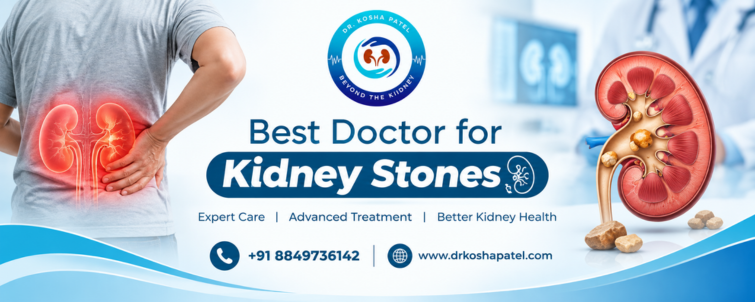
Best Doctor for Kidney Stones

Treatment for Chronic Kidney Disease Stage 4
September 21, 2026Best Doctor for Kidney Stones | Dr. Kosha Patel
Experiencing sharp, unexplained pain in your back or side can be alarming. For millions of people, this excruciating discomfort is caused by kidney stones. Finding the best doctor for kidney stones is a vital step in obtaining accurate diagnosis, effective relief, and long-term protection against future stones.
When dealing with kidney stones, timely care from an experienced kidney stone specialist ensures that you receive medical advice tailored to your specific needs. Whether you are experiencing your first episode or struggling with recurrent kidney stones, consulting a qualified kidney stone doctor like Dr. Kosha Patel can help guide your path to recovery and long-term kidney health.
What Are Kidney Stones?
Kidney stones are hard mineral and salt deposits that form inside your kidneys. They develop when urine becomes concentrated, allowing minerals to crystallize and stick together over time.
Common Types of Kidney Stones
- Calcium Stones: The most common type, usually in the form of calcium oxalate or calcium phosphate.
- Uric Acid Stones: These form in people who lose too much fluid, eat high-protein diets, or have metabolic conditions like gout.
- Struvite Stones: Often forming in response to urinary tract infections (UTIs), these can grow quickly and become quite large.
- Cystine Stones: Caused by a rare hereditary disorder that leads to excessive cystine excretion by the kidneys.
How Size and Location Impact Symptoms
Kidney stones vary greatly in size, ranging from microscopic grains of sand to larger, golf ball-sized stones. A tiny stone may pass through your urinary tract effortlessly without causing symptoms. However, a larger stone can block urine flow, triggering localized swelling, intense pain, and potential kidney strain. Understanding these factors helps your medical team determine the most appropriate treatment for kidney stones.
Common Symptoms of Kidney Stones
Recognizing kidney stone symptoms early can help you seek care before complications arise. The most common signs include:
- Severe side and back pain: Often felt below the ribs, coming in waves of fluctuating intensity.
- Radiating pain: Discomfort that shifts toward the lower abdomen and groin area.
- Painful urination: A sharp or burning sensation during urination.
- Blood in the urine: Urine appearing pink, red, or brownish.
- Urgent or frequent urination: Feeling the persistent need to urinate more often than usual.
- Nausea and vomiting: Caused by shared nerve signals between the kidneys and the digestive tract.
- Fever and chills: Potential warning signs indicating a serious urinary tract infection.
If you recognize these symptoms, consulting the best doctor for kidney stones ensures a prompt evaluation to prevent further health complications.
When Should You See a Kidney Stone Doctor?
While minor stone episodes may resolve with hydration, you should never ignore persistent or worsening symptoms. Professional evaluation by a kidney stone doctor is recommended whenever pain disrupts your daily life.
Urgent Warning Signs
You should seek immediate emergency medical care if you experience:
- Pain so severe that you cannot sit still or find a comfortable position
- Severe nausea accompanied by persistent vomiting
- Fever and chills accompanying back or side pain
- Complete inability or extreme difficulty passing urine
- Visible blood clots or significant blood in your urine
Early assessment by the best doctor for kidney stones helps protect kidney function and prevents infection from spreading.
What Type of Doctor Treats Kidney Stones?
When seeking care, patients often wonder which nephrologist for kidney stones or specialist they should visit. Both nephrologists and urologists play important roles in managing kidney health.
| Specialist | Primary Focus | Role in Kidney Stone Management |
| Nephrologist | Non-surgical kidney care, kidney function, and underlying metabolic conditions. | Focuses on kidney stone prevention, medical management, metabolic evaluation, and preserving overall kidney health. |
| Urologist | Surgical and structural conditions of the urinary system. | Focuses on surgical interventions, stone removal procedures, and anatomical obstruction repair. |
Choosing the best doctor for kidney stones depends on your stone size, symptoms, kidney function, and recurrence history. A skilled medical professional like Dr. Kosha Patel evaluates your overall kidney health to determine if medical management, metabolic testing, or surgical referral is appropriate.
How Kidney Stones Are Diagnosed
A thorough kidney stone diagnosis involves identifying the stone’s size, location, composition, and underlying cause.
- Medical History & Physical Examination: Evaluating your symptoms, family history, diet, and general health background.
- Urine Tests: Checking for mineral levels, infection markers, red blood cells, or crystals in the urine. A 24-hour urine collection may be recommended for recurring cases.
- Blood Tests: Assessing calcium, uric acid, phosphorus, and kidney function levels (such as creatinine and BUN).
- Imaging Studies: Ultrasound or non-contrast abdominal CT scans allow the medical team to view the exact location and size of the stone.
- Stone Analysis: Analyzing passed stones in a laboratory to reveal their chemical makeup and guide individual preventive strategies.
Working with the best doctor for kidney stones ensures that diagnostic steps are thorough and tailored to your situation.
Kidney Stone Treatment Options
Effective kidney stone treatment depends on stone composition, size, location, degree of pain, and kidney function.
1. Conservative Management & Observation
For small stones that can pass naturally, recommended strategies may include:
- Hydration: Drinking abundant water to help flush the stone out.
- Pain Relief: Medications prescribed or recommended by your physician to manage discomfort during passage.
- Medical Expulsive Therapy: Specific prescribed medications that relax ureter muscles, helping stones pass faster with less pain.
2. Interventional & Surgical Procedures
When a stone is too large to pass naturally, causes severe obstruction, or triggers infection, procedural intervention may be necessary:
- Shock Wave Lithotripsy (SWL): Non-invasive sound waves break larger stones into smaller fragments that can be passed in urine.
- Ureteroscopy (URS): A thin scope is passed through the urinary tract to locate, break up, or capture the stone directly.
- Percutaneous Nephrolithotomy (PCNL): A minimally invasive surgical procedure used for unusually large or complex kidney stones.
Finding the best doctor for kidney stones guarantees that your care pathway balances immediate symptom relief with long-term kidney preservation.
Why Individualized Kidney Stone Treatment Matters
No two patients experience kidney stones in the exact same way. Factors such as pre-existing kidney disease, high blood pressure, diabetes, anatomical variations, and dietary habits influence how stones develop and resolve.
A generalized approach to treatment for kidney stones can leave underlying metabolic imbalances unaddressed. The best doctor for kidney stones designs a care plan unique to your health profile, minimizing treatment risks while addressing root causes.
How a Kidney Specialist Can Help: Guidance from Dr. Kosha Patel
As a dedicated kidney specialist, Dr. Kosha Patel provides comprehensive care for individuals dealing with kidney stones and metabolic risk factors. A nephrologist’s evaluation extends beyond acute pain management, focusing heavily on preserving long-term kidney health and identifying why stones formed in the first place.
When consulting with Dr. Kosha Patel, patients receive:
- Comprehensive Metabolic Evaluations: Identifying blood and urine abnormalities that contribute to stone formation.
- Individualized Risk Assessment: Evaluating overall kidney function and metabolic health to prevent future complications.
- Tailored Medical Management: Selecting appropriate medications to adjust urine acidity or chemical balances.
- Long-Term Monitoring: Helping patients with recurrent kidney stones maintain clear health milestones over time.
By partnering with an attentive expert like Dr. Kosha Patel, you gain a trusted advocate committed to guiding you through both immediate recovery and lifelong kidney stone prevention.
How to Prevent Kidney Stones From Coming Back
If you have had one kidney stone, your risk of developing another is significantly higher. However, proactive kidney stone prevention strategies can drastically lower your risk of recurrence.
Key Preventive Measures
- Maintain Optimal Hydration: Drink enough fluid—primarily water—to produce at least 2 to 2.5 liters of clear urine daily.
- Manage Sodium Intake: High salt intake increases the amount of calcium your kidneys filter, raising stone risks.
- Adjust Protein Consumption: Limit excessive animal protein intake, which can elevate uric acid levels.
- Eat Calcium-Rich Foods Wisely: Dietary calcium naturally binds with oxalate in the digestive tract, reducing oxalate absorption.
- Get a Metabolic Workup: For recurrent kidney stones, specialized urine and blood testing can pinpoint exact chemical imbalances.
Working alongside the best doctor for kidney stones helps ensure your dietary and lifestyle changes are backed by clear clinical evidence.
Why Regular Follow-Up Matters
Recovery does not end once a stone passes. Routine follow-up visits with your kidney stone specialist play an essential role in preserving kidney function.
Regular monitoring allows Dr. Kosha Patel to track your kidney health through repeat imaging, periodic blood tests, and follow-up urine analysis. These ongoing evaluations help catch silent stone recurrence early—before severe pain or renal blockage develops again.
Conclusion
Kidney stones can be painful and disruptive, but you do not have to navigate them alone. Prompt medical care from the best doctor for kidney stones provides clear answers, effective treatment options, and peace of mind.
Whether you need diagnostic testing for new symptoms or expert guidance to stop recurring stones, Dr. Kosha Patel offers compassionate, thorough, and patient-focused kidney care.
Take Control of Your Kidney Health Today
If you are experiencing kidney stone symptoms or want to prevent future stones, do not wait for discomfort to worsen. Schedule a consultation with Dr. Kosha Patel today to receive a personalized kidney evaluation and care plan.
Frequently Asked Questions (FAQs)
1. How do I know if I need a nephrologist or a urologist for my kidney stones?
A urologist specializes in procedures to remove or break up acute stones causing blockages. A nephrologist, like Dr. Kosha Patel, focuses on diagnosing metabolic causes, managing overall kidney function, and developing personalized strategies for recurrent kidney stones.
2. Can drinking water alone dissolve an existing kidney stone?
Drinking water helps flush small stones out of the body and prevents new ones from forming, but water alone does not dissolve existing calcium stones. Seeking advice from the best doctor for kidney stones will help determine if your stone can pass naturally or requires medical intervention.
3. Why do I keep getting recurrent kidney stones?
Recurrent stones are often caused by underlying metabolic imbalances, chronic dehydration, high-sodium diets, or genetic factors. A comprehensive evaluation by a nephrologist for kidney stones can identify the exact cause.
4. What does the pain from a kidney stone feel like?
Kidney stone pain is often described as intense, sharp pain in the back, side, or lower abdomen. The pain often comes in severe waves and may shift toward the groin as the stone moves through the urinary tract.
5. How are kidney stones diagnosed by a specialist?
A specialist uses physical exams, urine tests, blood work, and imaging tools like ultrasound or non-contrast CT scans to evaluate the size, location, and composition of kidney stones accurately.
6. When is a kidney stone considered a medical emergency?
Seek immediate emergency care if your stone is accompanied by fever, chills, intractable nausea/vomiting, severe uncontrolled pain, or an inability to pass urine.
