- Your Kidney Health, Our Priority
- +91 8849736142
- kosha1012d@gmail.com
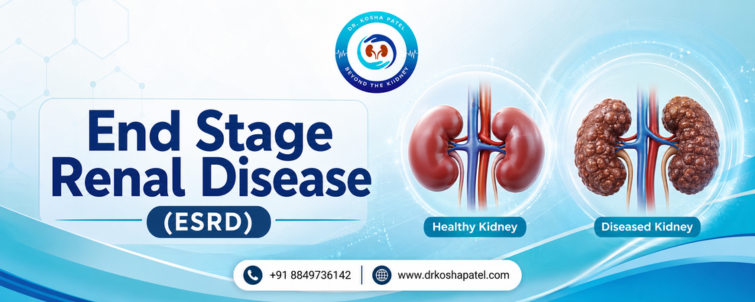
End Stage Renal Disease (ESRD)

Stage 3 Chronic Kidney Disease Treatment
June 29, 2026
Top 10 Nephrologist in Ahmedabad
July 10, 2026Understanding End Stage Renal Disease (ESRD): A Patient-Centered Guide
Hearing that you or a loved one is facing End Stage Renal Disease (ESRD) can feel incredibly overwhelming. It is entirely natural to have many questions about what this diagnosis means for your future, your family, and your daily life. Fortunately, managing End Stage Renal Disease (ESRD) is entirely possible with the right medical guidance, advanced therapies, and compassionate support.
Under the experienced care of Dr. Kosha Patel, you can navigate this diagnosis with confidence and hope. This comprehensive guide will explain everything you need to know about this condition, from understanding how your kidneys function to exploring your personalized treatment options.
What is End Stage Renal Disease (ESRD)?
End Stage Renal Disease (ESRD) represents the absolute final stage of chronic kidney disease. At this advanced phase, your kidneys have lost nearly all of their ability to function. Specifically, it means your kidney function has dropped to less than 15% of normal capability.
When your kidneys reach this level of decline, they can no longer keep you alive on their own. As a result, waste products and excess fluids build up to dangerous levels in your bloodstream. This requires immediate medical intervention to take over the work your kidneys can no longer perform.
How Healthy Kidneys Work
Your kidneys are two bean-shaped organs located just below your ribcage on either side of your spine. Despite their small size, they work tirelessly to keep your body balanced and healthy.
- Filtering Waste: Healthy kidneys filter about 120 to 150 quarts of blood daily to produce 1 to 2 quarts of urine.
- Balancing Fluids: They regulate water and essential minerals like sodium, potassium, and phosphorus in your blood.
- Hormone Production: Your kidneys produce hormones that control your blood pressure, make red blood cells, and keep your bones strong.
When End Stage Renal Disease (ESRD) occurs, this filtration process stops working almost completely. Consequently, toxins accumulate in your body, leading to a state of imbalance called uremia.
Causes
The primary causes of End Stage Renal Disease (ESRD) are chronic medical conditions. Over several years, these diseases slowly damage the delicate filtering units inside your kidneys, known as nephrons.
- Diabetes: High blood sugar levels can damage the small blood vessels in the kidneys over time. This is the leading cause of kidney failure globally.
- High Blood Pressure (Hypertension): Uncontrolled high blood pressure puts physical strain on the kidney’s blood vessels, reducing their ability to filter waste.
- Glomerulonephritis: This is an inflammation of the kidney’s tiny filtering units (glomeruli).
- Polycystic Kidney Disease (PKD): A genetic disorder that causes numerous fluid-filled cysts to grow in your kidneys, slowly destroying the surrounding tissue.
- Prolonged Urinary Tract Obstructions: Conditions like kidney stones, enlarged prostate, or certain cancers can block the flow of urine, causing pressure damage.
Risk Factors
Identifying your risk factors for End Stage Renal Disease (ESRD) can help you protect your remaining kidney function. While some risk factors are out of your control, others can be managed.
- Family History: A genetic history of kidney failure increases your likelihood of developing kidney issues.
- Age: Kidney function naturally declines as you age, making older adults more susceptible.
- Ethnicity: Certain demographic groups, including African Americans, Hispanics, and Native Americans, experience higher rates of kidney disease.
- Lifestyle Choices: Smoking, lack of physical activity, and a highly processed diet put extra strain on your cardiovascular and renal systems.
Symptoms
The symptoms of End Stage Renal Disease (ESRD) usually develop slowly over several years. In the early stages of kidney decline, you might not notice any signs at all. However, as kidney failure approaches, physical symptoms become very apparent.
Common symptoms include:
- Severe Fatigue: Feeling constantly exhausted due to a buildup of toxins or anemia.
- Swelling (Edema): Swelling in your legs, ankles, feet, or hands due to fluid retention.
- Shortness of Breath: Fluid can build up in your lungs, making it hard to breathe.
- Changes in Urination: Urinating much less frequently, or not at all.
- Persistent Nausea: Feeling sick to your stomach, vomiting, or experiencing a metallic taste in your mouth.
- Itchy, Dry Skin: High levels of phosphorus in the blood can cause severe skin itching.
- Loss of Appetite: A general distaste for food, leading to unintended weight loss.
Stages of Chronic Kidney Disease Leading to ESRD
The road leading to End Stage Renal Disease (ESRD) involves five specific stages of chronic kidney disease. Doctors measure these stages using your Estimated Glomerular Filtration Rate (eGFR). This rate tells us how well your kidneys filter waste.
- Stage 1: Kidney damage with normal function (eGFR ≥ 90 mL/min/1.73 m²).
- Stage 2: Mild loss of kidney function (eGFR of 60 to 89 mL/min/1.73 m²).
- Stage 3: Moderate loss of kidney function (eGFR of 30 to 59 mL/min/1.73 m²).
- Stage 4: Severe loss of kidney function (eGFR of 15 to 29 mL/min/1.73 m²).
- Stage 5: This final phase is known as End Stage Renal Disease (ESRD), where eGFR drops below 15 mL/min/1.73 m².
How ESRD is Diagnosed
To confirm a diagnosis of End Stage Renal Disease (ESRD), your doctor will perform specific diagnostic tests. Expert specialists like Dr. Kosha Patel look at a combination of blood and urine indicators to get an accurate picture of your kidney health.
- Blood Tests: These measure your creatinine and blood urea nitrogen (BUN) levels to calculate your exact eGFR.
- Urine Tests: A urinalysis checks for the presence of protein (albumin) in your urine, which is a major sign of kidney damage.
- Imaging Tests: Ultrasound or CT scans are used to view the size and structure of your kidneys.
- Kidney Biopsy: In some cases, a small tissue sample is taken to pinpoint the underlying cause of your kidney decline.
Treatment Options
An active diagnosis of End Stage Renal Disease (ESRD) means you must explore life-sustaining treatments. Dr. Kosha Patel focuses on providing personalized treatment plans that suit your physical needs and lifestyle preferences.
Dialysis
Dialysis is the most common management path for End Stage Renal Disease (ESRD). It acts as an artificial filter to clean your blood.
- Hemodialysis: This process pumps your blood through an external machine (a dialyzer) to clean it. It is typically done three times a week at a specialized clinic, or sometimes at home.
- Peritoneal Dialysis: This method uses the lining of your own abdomen (the peritoneal membrane) to filter your blood inside your body. It offers more scheduling flexibility and can be done daily while you sleep.
Kidney Transplant
A kidney transplant is often the preferred treatment for End Stage Renal Disease (ESRD). This surgical procedure replaces your damaged kidney with a healthy one from a living or deceased donor. For compassionate kidney care, Dr. Kosha Patel helps patients explore this option, assisting with transplant evaluations and managing your health before and after surgery.
Medications
Managing End Stage Renal Disease (ESRD) requires a carefully curated regimen of prescription medications. These drugs do not cure kidney failure, but they manage its severe symptoms and complications. They include blood pressure medications, phosphate binders, and erythropoietin to treat anemia.
Lifestyle Changes for ESRD Patients
Adopting healthy habits is essential to protect your remaining strength and improve your overall well-being during treatment.
Dietary Recommendations for End Stage Renal Disease (ESRD) Patients
Proper nutrition is critical for individuals living with End Stage Renal Disease (ESRD). Because your kidneys cannot filter waste efficiently, what you eat directly affects how you feel.
- Limit Sodium: Reducing salt prevents fluid retention and keeps your blood pressure under control.
- Monitor Potassium: High potassium can cause dangerous, irregular heart rhythms. Avoid high-potassium foods like bananas and potatoes.
- Control Phosphorus: High phosphorus weakens your bones. Limit dairy, nuts, and dark sodas.
- Manage Fluid Intake: If you are on dialysis, you must limit how much liquid you drink to avoid overloading your cardiovascular system.
Complications if Left Untreated
Left untreated, End Stage Renal Disease (ESRD) leads to life-threatening complications. When toxins and fluids build up continuously, they put severe strain on your vital organs.
- Cardiovascular Disease: This is the most common complication, as fluid buildup and high blood pressure strain the heart muscle.
- Anemia: Damaged kidneys produce less erythropoietin, the hormone responsible for creating oxygen-carrying red blood cells.
- Bone Disease: High phosphorus and low calcium levels weaken your skeletal structure, making bones brittle and prone to fractures.
- Fluid in the Lungs (Pulmonary Edema): This can cause severe breathing difficulties and sudden emergencies.
Prevention Tips
Slowing down progression toward End Stage Renal Disease (ESRD) requires proactive medical care. While you cannot undo existing kidney damage, you can take steps to preserve your remaining renal function:
- Keep your blood pressure below your doctor’s target numbers.
- Manage your blood sugar levels diligently if you have diabetes.
- Avoid the overuse of over-the-counter pain relievers (like NSAIDs), which can damage kidney tissue.
- Eat a balanced, low-sodium diet and stay physically active.
When Should You Visit a Kidney Specialist?
You should not wait until your symptoms become severe to seek help. If you have chronic kidney disease, diabetes, or high blood pressure, it is vital to seek help long before you reach the stage of End Stage Renal Disease (ESRD). If you notice persistent fatigue, unusual swelling, or changes in how often you urinate, it is crucial to consult Dr. Kosha Patel for an evaluation.
Why Choose Dr. Kosha Patel?
When dealing with a complex renal condition, you deserve a medical partner who combines advanced expertise with genuine compassion. Dr. Kosha Patel provides comprehensive patient support every step of the way, helping you understand your choices and feel comfortable with your care.
Dr. Kosha Patel offers advanced nephrology care with a gentle, patient-focused approach. Our clinic prioritizes clear communication, customized therapy programs, and a warm, welcoming environment. Whether you need help managing early-stage kidney disease or require advanced treatment planning, we are here to support you.
Frequently Asked Questions
1. What are the earliest warning signs of End Stage Renal Disease (ESRD)?
The earliest warning signs of End Stage Renal Disease (ESRD) include mild swelling in the ankles, persistent daytime fatigue, muscle cramps at night, and noticing foamy urine. However, because kidney disease can progress silently, regular lab work is the most reliable way to catch changes early.
2. Can you reverse End Stage Renal Disease (ESRD)?
No, you cannot reverse End Stage Renal Disease (ESRD) once the kidneys have reached this stage of permanent damage. However, you can manage the condition highly effectively using modern treatments like dialysis and kidney transplantation.
3. How long can a person live on dialysis?
Many patients live for 5 to 10 years on dialysis, and some can live up to 20 years or more. Your life expectancy depends on your overall health, how closely you follow your treatment plan, and your adherence to dietary guidelines.
4. Is a kidney transplant a permanent cure?
While a kidney transplant is the most effective treatment, it is not considered a permanent cure. Transplanted kidneys from living donors last an average of 15 to 20 years, while those from deceased donors last about 10 to 12 years. Some patients may eventually need a second transplant or return to dialysis.
5. What foods should I completely avoid with kidney failure?
You should limit foods high in sodium, potassium, and phosphorus. This includes avoiding processed meats, canned soups, bananas, oranges, tomatoes, whole grains, dairy products, and sodas with added phosphates. Because everyone’s body is different, you should consult Dr. Kosha Patel to receive tailored guidance.
6. Can I still work while undergoing dialysis?
Yes, many patients continue to work while on dialysis. Choosing peritoneal dialysis or home hemodialysis offers more flexible scheduling, allowing you to perform your treatments around your professional life.
Conclusion
Living with End Stage Renal Disease (ESRD) is a major adjustment, but you do not have to walk this path alone. With the help of modern medicine, healthy lifestyle changes, and a dedicated kidney specialist, you can continue to enjoy a fulfilling, active life.
Take control of your health today. If you or a loved one needs specialized kidney care, schedule a consultation with Dr. Kosha Patel today. Our compassionate team is ready to walk with you every step of the way toward a healthier tomorrow.
Book Your Consultation with Dr. Kosha Patel Today!
- Dr Kosha Patel, First Floor, Shalby Multispeciality Hospital, OPD number 33, Kathawada Rd, New India Colony, Naroda, Ahmedabad, Gujarat 382330
- Contact Us: +91 8849736142
- Email: kosha1012d@gmail.com
- Website: www.drkoshapatel.com
